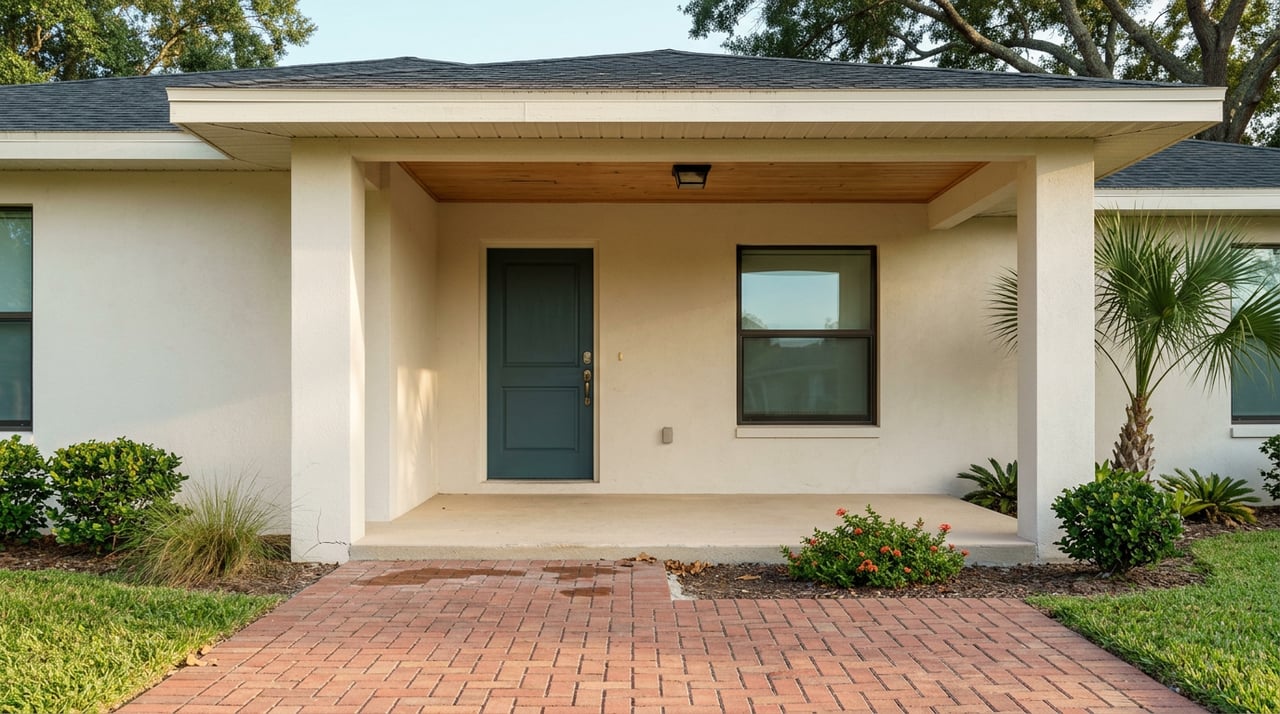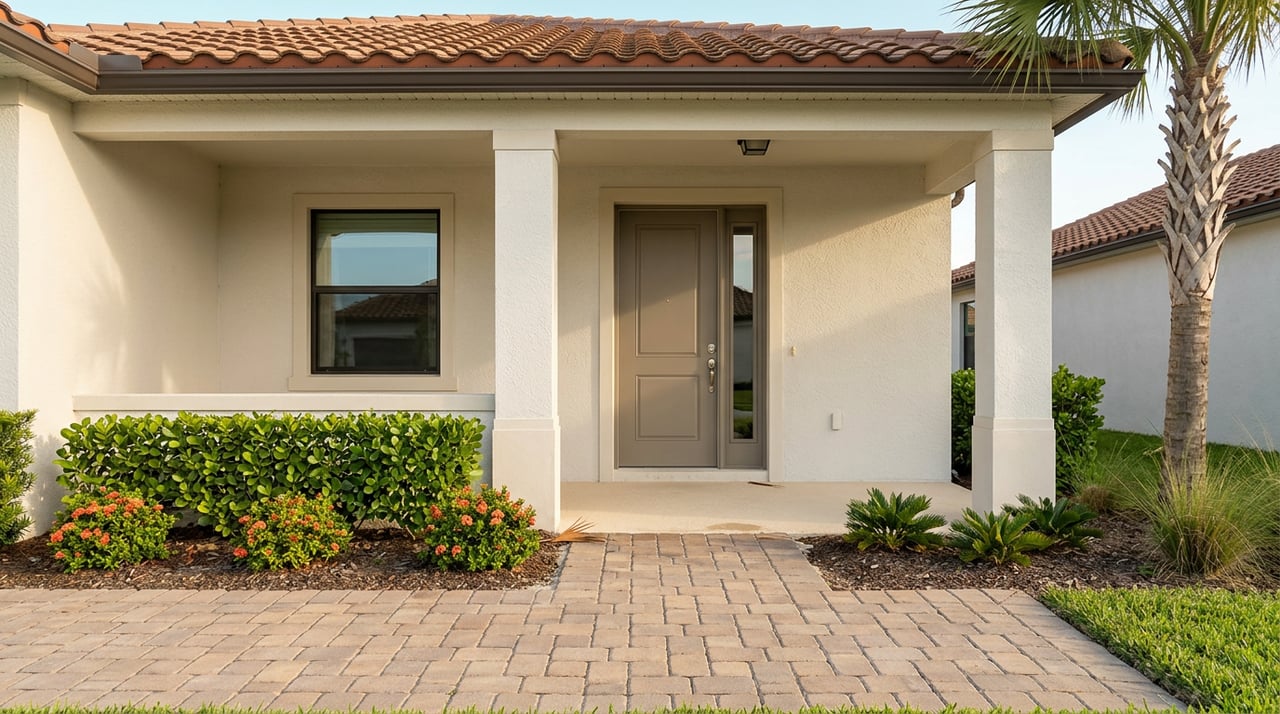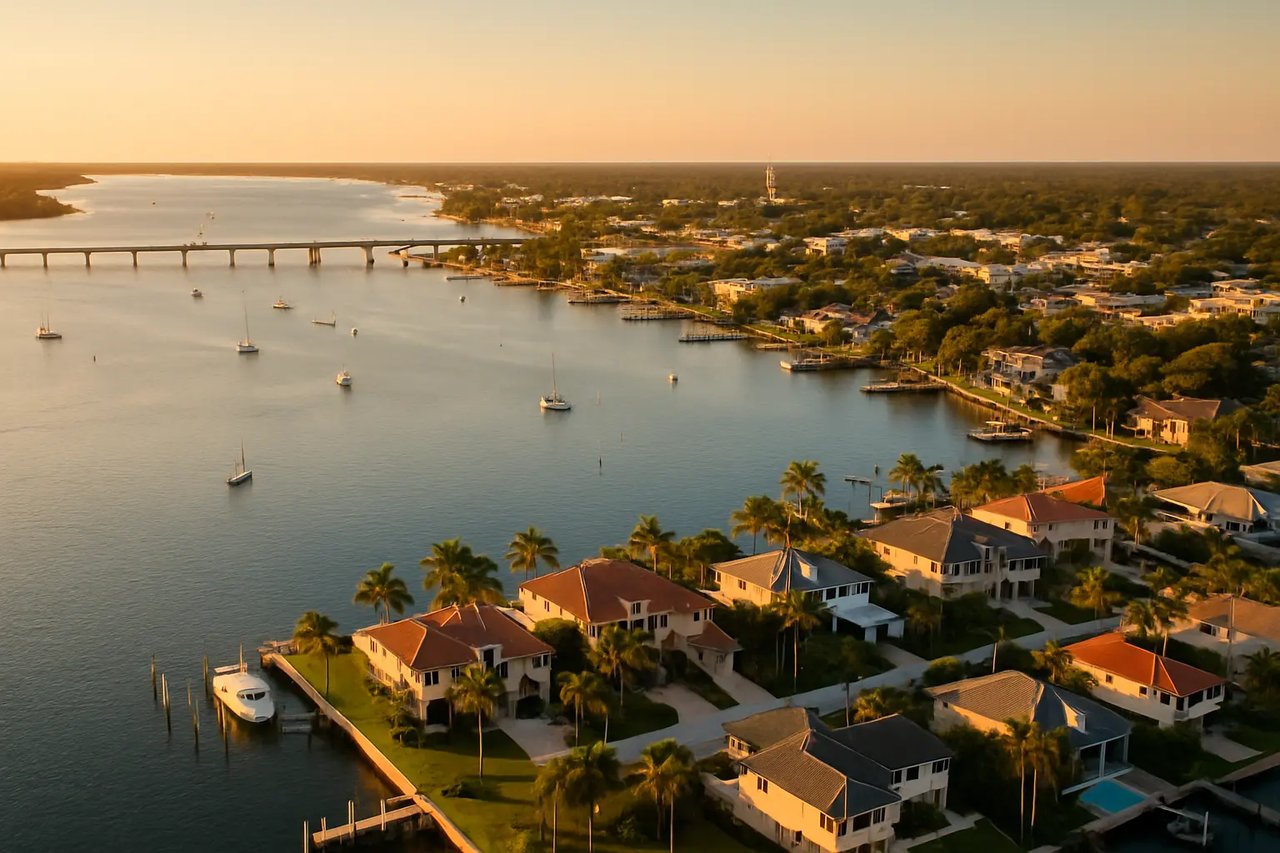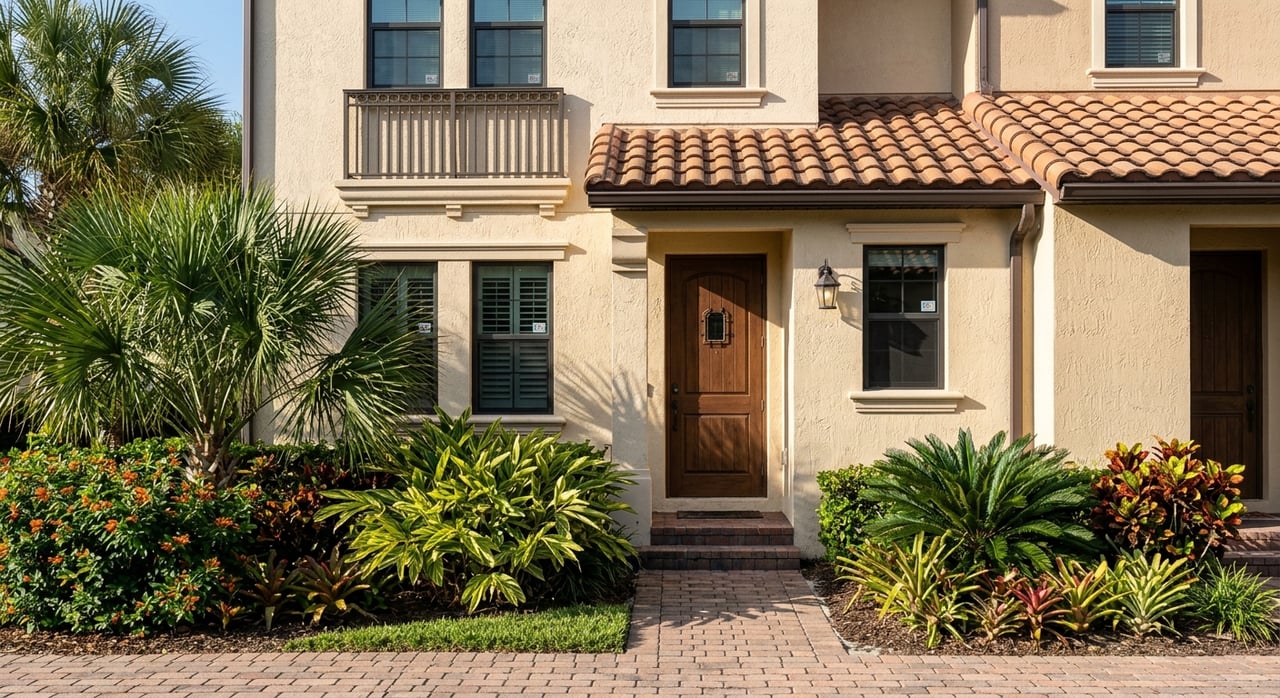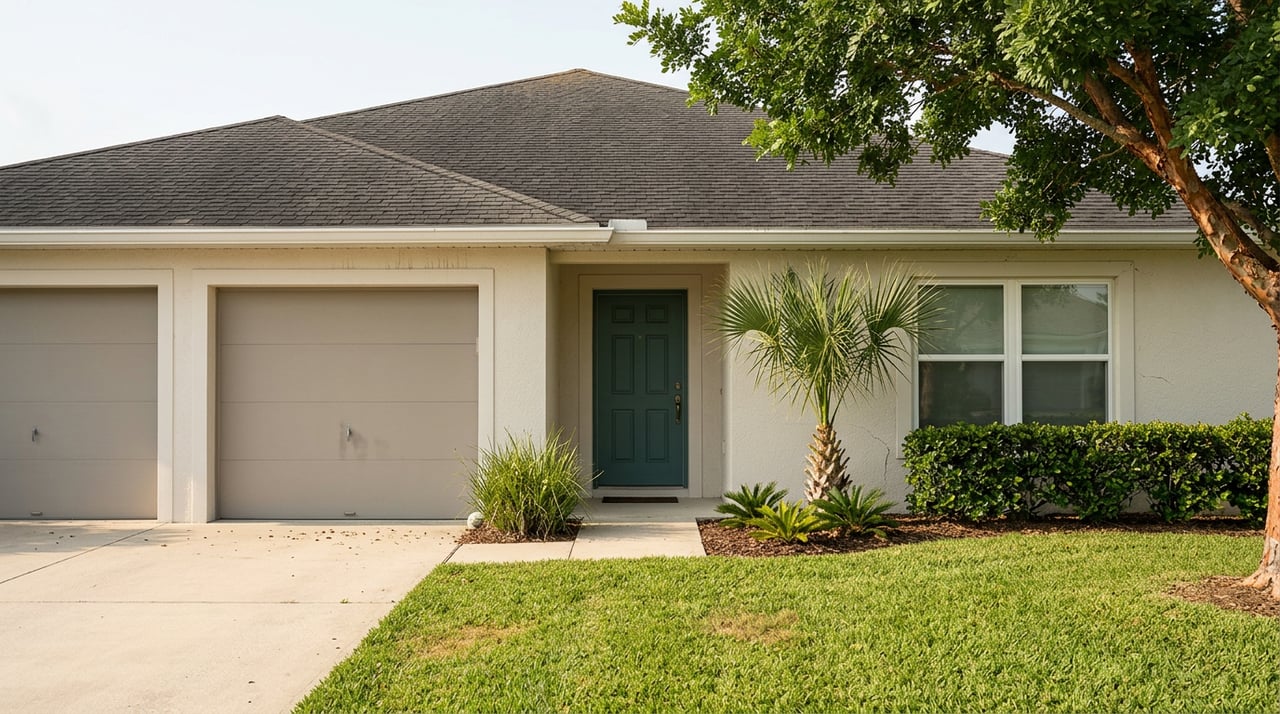
Two three-bedroom homes, same year built, same square footage. One sits on a canal in Rio with a dock out back. The other sits a few miles west in Tropical Farms, no water in sight, priced meaningfully lower. Ask most buyers what separates them and they'll point at the view. That's the number everyone watches. It's not the number that decides what you can actually afford to own.
Stuart's real estate portals can't even agree on what a "typical" home costs here right now. One tracker puts the three-month median sale price through May 2026 at $307,000, up 8.3% year over year, with homes taking a median 93 days to sell. Another shows August 2026 asking prices sitting around $499,000. A third lands closer to $405,000. The gap between those numbers is bigger than most neighborhood price differences in this city. So before anyone can compare a Sewall's Point canal home to an inland Tropical Farms rambler, the first lesson is that the "market price" quoted anywhere online is a moving target depending on whether it's counting closed sales, active listings, or something in between.
That's a reason to stop treating price as the whole comparison. The number that actually separates Stuart's waterfront pockets from its inland ones is the one that shows up every year on your insurance renewal, not the one on the closing statement.
The Flood Line Matters More Than the Water Line
Martin County's flood zone map does the real sorting. According to the county's Flood Protection page, Special Flood Hazard Areas begin with the letters A or V, and every one of them carries a mandatory flood insurance requirement if there's a mortgage attached. Zone X, by contrast, is the low-risk designation, and it's where much of inland Stuart, including Tropical Farms, sits.
Waterfront pockets like Sewall's Point, Rio, Port Salerno, and the Martin County side of Hutchinson Island typically fall into AE or the higher-risk VE zone, meaning wave action is part of the calculation, not just still-water flooding. Homeowners there don't get to opt out of flood coverage the way an inland buyer might. A standard homeowners policy excludes flood damage entirely, so that coverage comes as a separate line item, and for AE or VE properties it's not optional once a lender is involved.
Here's the part that surprises people who assume "inland equals safe": Martin County's storm surge evacuation map shows the risk fading gradually, not stopping at a line. The county's evacuation zone page notes that a home outside a designated evacuation zone can still flood from a nearby stream or pond during a tropical system. Inland buyers get a real discount on the insurance side, but not a guarantee.
The risk isn't theoretical for either side of that line. Hurricane Frances came ashore as a Category 2 storm near Sewall's Point in September 2004, tearing off roofs and knocking out power across the county for weeks, and it's still the storm local contractors measure against. Hurricane Nicole in November 2022 flooded riverfront areas near Stuart, washed out sections of Indian River Drive, and temporarily closed the bridges to Hutchinson Island, according to reporting from WPTV at the time. Neither storm made landfall directly here. Both still reshaped what waterfront insurance costs today.
What the Zone Actually Costs You Each Year
| Waterfront (Sewall's Point, Rio, Port Salerno, Hutchinson Island) | Inland (Tropical Farms and similar) | |
|---|---|---|
| Typical flood zone | AE or VE, a Special Flood Hazard Area | Usually X, low to moderate risk |
| Flood insurance | Mandatory with a mortgage | Optional unless the lender requires it |
| Window frame commonly specified | Aluminum, built for higher wind load and salt exposure | Vinyl often sufficient, lower salt exposure |
| Insurance load versus the citywide average | Roughly 20% to 50% higher | At or below the citywide average |
The citywide average homeowners premium in Stuart runs around $2,971 a year, with waterfront properties along the river or ocean commonly landing between $3,500 and $4,500 because of the added hurricane and storm surge exposure. A separate countywide estimate puts the range even wider, $3,200 to $5,000 a year for $300,000 in dwelling coverage, depending on roof age, construction year, and distance from the coast. The two figures don't match exactly, but they agree on the direction: distance from tidal water is doing more work in that premium than square footage or finishes.
Roof age compounds it. Roofs under 15 years are broadly insurable across carriers. Roofs between 15 and 25 years face surcharges and a shrinking list of willing carriers. Past 25 years, private coverage often disappears and Citizens becomes the only option, if it's an option at all. A wind mitigation inspection, which runs about $100 and stays valid for five years, documents features like impact windows and reinforced roofing that can knock 20% to 30% off a windstorm premium, potentially saving a waterfront owner $800 to $1,200 a year. Martin County's Class 5 rating under FEMA's Community Rating System adds another layer, cutting NFIP flood premiums by 25% in high-risk zones and 10% in moderate-risk zones. None of that shows up in a listing photo. All of it shows up in the first renewal bill.
Citizens Is Leaving, and That Changes Who Can Buy Where
For years, Citizens Property Insurance functioned as the backstop for coastal Florida homes the private market wouldn't touch. That backstop has largely pulled out of Martin County. The county's personal-residential multiperil policy count fell from 8,770 at the end of March 2024 to just 1,543 by the end of May 2026, a decline of roughly 82%, with zero personal wind-only policies remaining on the books, according to Citizens' own county-level filings. Statewide, Citizens fell from around 936,000 policies at the close of 2024 to under 294,000 by that same May 2026 date.
That's not a story about Citizens shrinking for its own sake. It means Martin County is now overwhelmingly a private-carrier market, so a buyer weighing a Sewall's Point or Hutchinson Island purchase is really underwriting against companies like Tower Hill, Heritage, and American Integrity rather than a state-run fallback. Section 627.715 of the Florida Statutes adds a deadline to watch: it phases in mandatory flood insurance for any remaining Citizens policy that includes wind coverage, reaching every remaining personal lines Citizens policyholder by January 1, 2027. From today's date that's about five months out, which means anyone still holding a Citizens policy on a waterfront property here is running out of runway to decide whether staying still makes financial sense.
The practical advice from insurance brokers working this county is blunt: get a quote before the offer is accepted, not during the inspection period and not after. A quote can shift the all-in carrying cost of a South Florida coastal property by $5,000 to $15,000 a year, and that number moves per property, not per zip code.
The Hutchinson Island Wrinkle: It's Not Just Insurance
Waterfront condo buyers on Hutchinson Island are underwriting a second layer that single-family waterfront buyers on Rio or Port Salerno don't face. Florida's post-Surfside reforms require any condominium building three or more habitable stories to complete a milestone structural inspection once it reaches 30 years old, or 25 years if it sits within three miles of the coast, which covers essentially all of Hutchinson Island's stock. Buildings must also complete a Structural Integrity Reserve Study covering eight structural components: roof, load-bearing elements, fire protection, plumbing, electrical, waterproofing, windows and doors, and anything else over $25,000. Associations that existed before July 2022 were required to have that initial study done by December 31, 2025, a deadline that has already passed. If a listing agent can't produce one for a building that age, that's worth asking about before writing an offer.
Budgets adopted for 2026 must show full reserve funding for those structural items unless the association qualifies for a narrow, temporary waiver tied to active milestone repairs. That funding requirement is exactly what triggers the special assessments that catch buyers off guard after closing, since a reserve shortfall doesn't show up in the HOA fee quoted during the listing walkthrough. Florida law does give buyers a real tool here: the resale disclosure package must include the most recent milestone inspection report and SIRS, and buyers get a three-day right of rescission after receiving those association documents. As of January 1, 2026, condo associations with 25 or more units are also required to maintain a public records portal, which makes pulling that paperwork before the option period ends easier than it was a year ago.
Before You Write the Offer
- Request a wind mitigation inspection report from the seller, or budget roughly $150 to order one before closing if none exists.
- Confirm the flood zone directly through Martin County's mapping tools rather than relying on a listing description.
- For any condo building three stories or taller, ask for the most recent milestone inspection and Structural Integrity Reserve Study before the rescission period expires.
- Get an actual insurance quote for the specific property during your due diligence period, not a rough estimate based on the neighborhood.
- If the seller currently carries a Citizens policy, ask when it was issued and how the January 2027 flood-insurance phase-in under Section 627.715 will affect the annual cost of keeping it.
Frequently Asked Questions
Does every waterfront home in Stuart require flood insurance? Only if it sits in a Special Flood Hazard Area, which covers most zones starting with A or V, and only if there's a mortgage. Martin County's flood zone maps show the exact designation for any address.
Is Citizens Property Insurance still available in Martin County? Technically yes, but its footprint has shrunk by roughly 82% since early 2024. Most Stuart-area homes are now insured through private carriers, and buyers should not assume Citizens will be an option or the cheapest one.
What's the difference between a milestone inspection and a SIRS? A milestone inspection is a physical structural assessment performed by a licensed architect or engineer. A Structural Integrity Reserve Study is the financial planning document that translates those structural findings into a funding schedule. Florida requires both for qualifying condo buildings, and buyers are entitled to see the results before closing.
The price gap between a Rio canal home and a Tropical Farms rambler is the number that shows up on a portal search. The insurance gap, the flood zone designation, and, for condo buyers, the reserve funding status are the numbers that show up every year after that. Getting those numbers right before an offer is written is exactly the kind of local groundwork Primadonna Properties does for buyers across Stuart, whether the address is on the water or three miles from it. Schedule Your Consultation to talk through what a specific address in Martin County will actually cost to own.